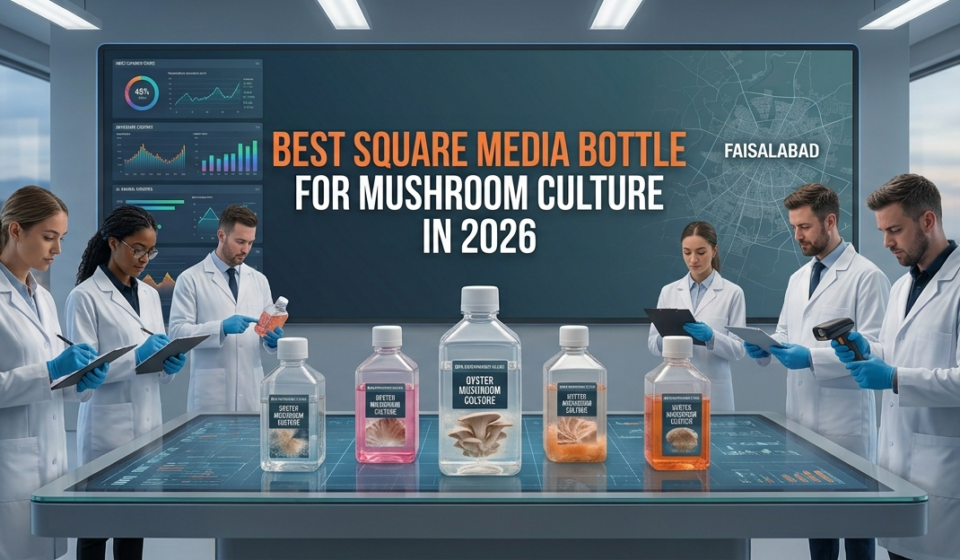

Growing healthy mushrooms takes a long time before the first fruiting occurs. One of the least-known important items of equipment are an rectangular media container used for mushroom cultivation. When you’re creating liquid cultures, storing nutrients in media or conducting research in a laboratory the proper media bottle can help ensure the sterility of your lab, enhances organization and improves the success rate.
The year 2026 is when mushroom farmers ranging from amateurs to commercial growers are more often opting for square media bottles due to their ability to increase storage space, minimize spills, and are able to withstand repeated sterilization. This guide provides everything you must know about choosing how to use, maintain, and clean the right square media bottle to grow mushrooms.
What Is a Square Media Bottle for Mushroom Culture?
An round media bottle used for mushroom cultivation is a laboratory-quality storage container that is designed to be used for making sterilizing, storing and storing the nutrient solutions that are utilized in mushroom cultivation. In contrast to round bottles, square bottles are flat on the sides, which make them more convenient for storage, marking and carry.
These bottles are often utilized to:
- Liquid culture preparation
- Agar media storage
- Nutrient solution mixing
- Sterile storage of water
- Research in the laboratory on mushrooms
The majority of top-quality media bottles are made with borosilicate glasses and the autoclavable polypropylene (PP) that allows repeat sterilization without compromising strength.
Why Mushroom Growers Prefer Square Media Bottles
The success of mushroom cultivation is contingent on sterile conditions being maintained. Each transfer, storage step and preparation of nutrient introduces risk of contamination if the wrong container is utilized.
Square media bottles address a number of common issues.
Their small size allows for greater bottles to fit in shelves for incubators, laboratory cabinets refrigerators, incubators, or storage cabinet. The large mouths facilitate pouring and cleaning, while leak-proof caps help reduce the risk of contamination in storage and transportation.
In laboratories that manage multiple cultures at the same time The square bottles simplify labeling.
Key Features to Look For
There are many bottles in the lab that are suitable for growing mushrooms. The right choice can improve the efficiency as well as the reliability.
| Feature | Why It Matters |
|---|---|
| Borosilicate Glass or PP Plastic | Resists repeated sterilization |
| Leak-Proof Cap | It prevents spills and contamination. |
| Graduated Measurement Marks | Enables accurate media preparation |
| Wide Mouth Opening | Easy pouring and easier cleaning |
| Square Design | Maximizes storage space |
| Chemical Resistance | Ideal for nutrient media as well as cleaning agents |
These features guarantee long-term performance in commercial and home labs.
Common Uses in Mushroom Cultivation
Square media bottles can serve many uses in the cultivation process.
Liquid Culture Preparation
Liquid culture lets cultivators grow healthy and nutritious mushroom genetics rapidly. Nutrient broth is prepared in sterilized media bottles prior to inoculation using clean mycelium.
The square shape helps to shake the culture while also reducing storage space.
Agar Media Storage
Agar is often prepared by growers in larger quantities. Instead of pouring the entire plate at once, agar that is sterilized can be safely stored in media bottles until they are needed.
Storage in a proper manner can reduce the time needed to prepare for future lab work.
Sterile Water Storage
Sterile water plays an essential function during the preparation of syringes, inoculation and cleaning of labs.
Media bottles are a secure long-term storage option while maintaining the sterility.
Nutrient Solution Mixing
Research laboratories are often able to create custom nutrition formulas. Gradually marked measurement marks help to ensure that every batch is mixed correctly.
Square vs. Round Media Bottles
Both styles are effective However, square bottles have the advantages of practicality for mushroom cultivation.
Square bottles use less shelf space, and are more stable when stored. Their flat surfaces facilitate labeling making strain identification much easier.
Round bottles On the other hand can be a little more easy to swirl while mixing liquids but take up larger storage spaces.
For growers who maintain multiple cultures typically, square bottles provide more overall lab organization.
Glass vs. Plastic Media Bottles
Selecting the appropriate material will depend on the process of cultivation you follow.
Glass bottles remain the top option for professional labs due to the fact that they resist scratches, stand up to repeated autoclaving and provide outstanding resistance to chemicals.
Polypropylene bottles are lightweight and resistant to shattering, and are suitable for use in routine labs. They are particularly useful in field research or educational labs where breakage could be a worry.
Both are excellent options when bought from reputable lab equipment manufacturers.
Proper Sterilization Methods
Sterility is the mainstay of a successful culture of mushrooms.
Prior to use before using, thoroughly wash the bottle with a safe laboratory detergent, then rinse it with distilled water.
Most media bottles can be sterilized with an autoclave using the standard laboratory setting in accordance with the manufacturer’s guidelines. After sterilization, let bottles to cool prior to opening in order to limit the risk of contamination.
Always check seals and caps for wear prior to each sterilization cycle.
Best Practices for Using Media Bottles
The proper handling of children dramatically improves their performance rates.
Some simple habits make a significant difference:
- Label every bottle clearly and clearly with the contents and date of preparation.
- Be careful not to open bottles in the absence of and keep your workspace clean.
- The media should be stored in the appropriate conditions, based on the recipe.
- Replace the caps that are damaged immediately.
- Make sure to clean the bottles after each use.
These methods help to maintain the sterile culture while also extending bottle life.
Common Mistakes to Avoid
A lot of contamination problems result from improper laboratory practices, rather than defective equipment.
Insufficient space is left for expansion of sterilization.
The use of glass bottles with cracks increases the risk of contamination.
Reusing caps that are damaged can result in leaks as well as microbial entry.
Unproper labeling is often the cause of confusion when several mushroom varieties are being grown simultaneously.
The attention to these little factors can help ensure consistency across each cultivation cycle.
How to Choose the Right Size
They are offered in a variety of sizes.
Smaller bottles ranging from 100 to 250 mL are ideal for testing cultures as well as research.
Medium 500mL bottles are great for the routine preparation of liquid cultures.
Large 1,000 mL bottles suit commercial laboratories preparing media in higher volumes.
Selecting the right size helps reduce wasted space while increasing the efficiency of labs.
Why Quality Matters
The most expensive laboratory bottles can be more expensive initially, but they are more durable and clearer markings for measurements caps that are stronger, as well as higher durability to sterilization over and over again.
In poor quality bottles, you may notice cracked or faded graduated or leaky lids after a series of autoclave cycles.
For mushroom farmers who make regular cultures investing in top quality equipment will save time and decrease loss of contamination in the long haul.
Conclusion
A square bottle of media for mushroom cultivation is among the most useful tools in any cultivation lab. Its compact design, dependable sealing, precise measurements, and compatibility with sterilization makes it perfect for the preparation of liquid cultures, storing nutrients media, and ensuring safe workflows.
If you’re cultivating delicious mushrooms or medicinal plants, or conducting research in the lab selecting a high-quality square media bottle helps organize and reduces the risk of contamination and helps promote healthier mycelium growth. As the methods for growing mushrooms evolve in 2026, reliable equipment for labs is essential to ensure consistent achievement.
Frequently Asked Questions
1. What can an oval media bottle that is employed for in the field of the mushroom world?
This is used for preparation to sterilize, store and ship liquid media, culture, unsterile water, as well as nutritional solutions for mushroom cultivation.
2. Are borosilicate glasses superior to plastic?
Borosilicate glass is superior in thermal and chemical resistance and polypropylene plastic is lighter and less susceptible to breaking. Both are appropriate for use in laboratories.
3. Do square-shaped media containers need to be autoclaved?
Yes. The majority of laboratory-grade borosilicate glass as well as autoclavable polypropylene bottles have been designed to withstand repeated sterilization by autoclave.
4. What size of bottle is ideal in liquid culture?
A 500mL bottle is a common choice since it has enough capacity for the majority of liquid culture recipes and leaves the space for safe mixing.
5. How can I avoid contamination when using a medium bottle?
Clean the bottle thoroughly Work in a clean space and avoid opening it too frequently. check caps for damage as well as label the bottle and keep your cultures in a correct manner.