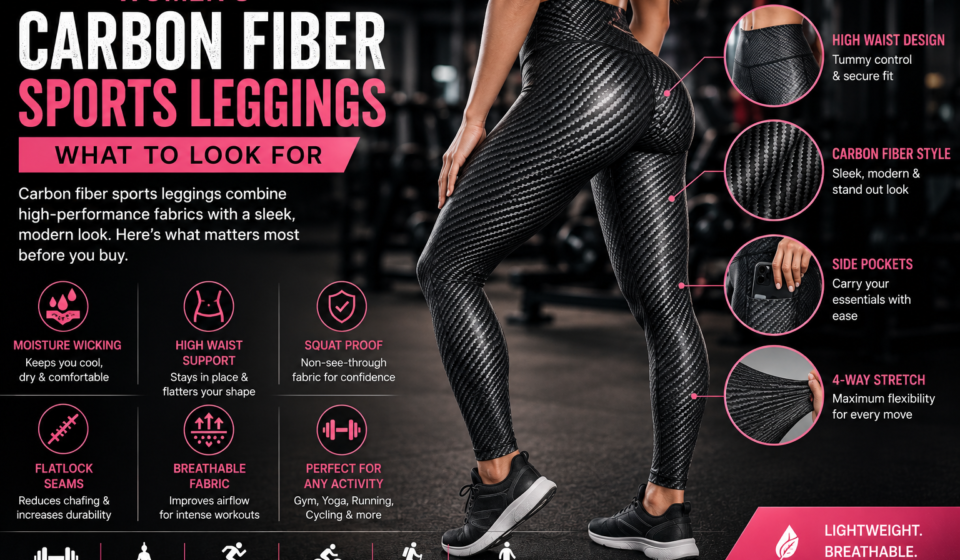

Women’s carbon fiber sports leggings have become popular among people who want workout clothing that looks different from ordinary black leggings. The distinctive carbon-fiber-style pattern gives them a technical, futuristic appearance, while the underlying fabric is usually designed to provide stretch, comfort, and freedom of movement during exercise.
There is one important detail shoppers should understand before buying, though. The phrase “carbon fiber leggings” does not necessarily mean the leggings are made from actual carbon fiber. Many products use polyester, nylon, spandex, or elastane with a carbon-fiber-inspired print or texture. For example, current products marketed as women’s carbon fiber leggings include polyester and spandex blends rather than structural carbon-fiber material.
That distinction matters because the name alone tells you very little about how a pair will perform. If you’re buying leggings for running, weight training, yoga, cycling, or everyday wear, the fabric, fit, waistband, stretch, breathability, and opacity are much more important than the carbon-fiber appearance.
What Are Women’s Carbon Fiber Sports Leggings?
Women’s carbon fiber sports leggings are athletic leggings that feature a carbon-fiber-inspired visual design, generally combined with a flexible performance fabric. They are available in different cuts, lengths, compression levels, and materials, so two products using almost the same name can feel completely different when worn.
The carbon-fiber pattern is mainly an aesthetic feature. It creates a sporty, technical look that works particularly well with black, grey, red, white, or other simple workout clothing. Some leggings are designed specifically for gym workouts, while others are marketed for running, yoga, outdoor activities, or casual athleisure wear.
For that reason, the first question shouldn’t be “Do these leggings look good?” It should be “What am I going to use them for?”
A runner may care more about moisture management and a secure waistband. Someone doing yoga may prioritize flexibility and comfort. A person buying leggings for strength training may care most about stretch, durability, and squat-proof coverage.
What Does “Carbon Fiber” Actually Mean?
The term can be confusing because real carbon fiber is a specialized material used in engineering applications such as aerospace, automotive components, sporting equipment, and composite structures. A pair of fashion or fitness leggings with a carbon-fiber pattern is generally not equivalent to clothing made from structural carbon-fiber material.
When shopping, check the fabric composition instead of relying on the product name.
A listing might specify something such as polyester and spandex, nylon and elastane, or another synthetic performance blend. The percentages can affect stretch, recovery, durability, softness, and moisture management.
This is one of the easiest ways to avoid buying based on marketing language alone.
Which Features Actually Matter?
A good pair of women’s sports leggings should move with your body without constantly sliding down, rolling at the waist, or becoming uncomfortable after an hour of exercise.
Four-way stretch is particularly useful for activities involving frequent movement. Squats, lunges, stretching, yoga poses, running strides, and strength exercises all require fabric to move in different directions. A flexible material can make these movements feel much more natural.
Moisture management is another important feature. During exercise, sweat can make ordinary fabric feel heavy and uncomfortable. Performance fabrics designed to move moisture away from the skin can improve comfort, particularly during running, HIIT, gym sessions, and outdoor workouts.
The waistband deserves more attention than it usually gets. A high-rise waistband can provide a secure feeling during movement, but it shouldn’t dig painfully into the stomach or constantly roll downward. A waistband that looks supportive in a product photograph can still be uncomfortable if the size or construction isn’t right.
Opacity is also critical. Leggings that look completely opaque while standing can become more transparent when stretched during a squat or deep movement. If you intend to use them for weight training or other exercises involving significant stretching, look for specific information about non-see-through or squat-proof construction rather than assuming every thick-looking legging is opaque.
Carbon Fiber Leggings Compared With Ordinary Workout Leggings
| Feature | Carbon Fiber Sports Leggings | Regular Sports Leggings |
|---|---|---|
| Appearance | Technical and futuristic | Usually simpler |
| Stretch | Depends on fabric | Depends on fabric |
| Compression | Product dependent | Product dependent |
| Moisture management | Product dependent | Product dependent |
| Squat-proof coverage | Product dependent | Product dependent |
| Waistband | Varies by design | Varies by design |
| Everyday styling | Sporty and distinctive | Usually easier to match |
| Main advantage | Unique appearance + athletic design | Versatility and simplicity |
The important point is that carbon-fiber styling does not automatically make leggings higher quality. A plain pair of leggings made from an excellent performance fabric may outperform a more expensive carbon-patterned pair.
Which Carbon Fiber Leggings Are Best for Different Activities?
For gym workouts, look for four-way stretch, a secure waistband, good opacity, and durable stitching. These features matter when performing squats, lunges, deadlifts, leg presses, and other exercises that repeatedly stretch the fabric.
For running, comfort becomes even more important. Look for breathable material, moisture management, a waistband that stays in place, comfortable seams, and pockets if you normally carry a phone or keys.
For yoga and Pilates, flexibility should be a priority. Extremely rigid or heavily compressive leggings can become uncomfortable during stretching and longer sessions.
For casual wear, appearance becomes more important. Carbon-fiber patterns can work particularly well with an oversized sweatshirt, simple hoodie, cropped jacket, or neutral sneakers.
For outdoor activities, consider additional features such as drying speed, sun protection, durability, and weather suitability. Some products in this category are marketed for both land and water activities and advertise features such as four-way stretch, quick drying, breathability, and UPF protection.
How to Choose the Right Size
Sizing is one of the biggest reasons people are disappointed with online activewear purchases.
Don’t automatically choose the same size you wear in jeans or casual trousers. Sportswear manufacturers use different sizing systems, and compression leggings can fit very differently from loose clothing.
Measure your waist and hips and compare them with the manufacturer’s size chart. If you’re between sizes, check whether the manufacturer recommends sizing up or down and consider how much compression you actually want.
A correctly fitted pair should feel secure while allowing normal movement.
If the waistband digs into your skin, the fabric becomes extremely transparent when you squat, seams pull noticeably, or your movement feels restricted, the leggings may be too small.
If the waistband constantly slides down, excess fabric gathers behind the knees, or the leggings need repeated adjustment, they may be too large.
A Simple Buying Flowchart
START
  │
  ▼
What will you use the leggings for?
  │
  ├── Gym / Strength Training
  │       ↓
  │   Check stretch + opacity + waistband
  │
  ├── Running
  │       ↓
  │   Check breathability + moisture management + fit
  │
  ├── Yoga / Pilates
  │       ↓
  │   Check flexibility + comfort + waistband
  │
  ├── Outdoor Activities
  │       ↓
  │   Check durability + drying speed + weather features
  │
  └── Everyday Wear
          ↓
      Prioritize comfort + fit + appearance
          │
          ▼
   Check actual fabric composition
          │
          ▼
   Check waist & hip measurements
          │
          ▼
   Check opacity / squat-proof information
          │
          ▼
   Check reviews + return policy
          │
          ▼
       BUY WITH CONFIDENCE
Don’t Confuse the Pattern With Performance
This is probably the most important point when shopping for carbon-fiber sports leggings.
A carbon-fiber pattern can make leggings look more technical, but the appearance doesn’t tell you whether they are comfortable, breathable, durable, or suitable for exercise.
Two pairs can look almost identical in photographs while having very different fabric compositions and construction.
Instead of asking whether the design looks premium, examine the actual specifications.
Check the material.
Check the stretch.
Check the waistband.
Check the stitching.
Check the opacity.
Check the intended activity.
Then look at the return policy.
That process gives you much better information than the product name.
Are Carbon Fiber Leggings Good for Running?
They can be, but the carbon-fiber design itself provides no special running advantage.
For running, choose leggings that stay in place without excessive compression, allow unrestricted movement, manage moisture reasonably well, and don’t create irritating seams.
If you run outdoors, pockets can also be useful for carrying small essentials. If you run in hot weather, breathable and quick-drying fabric can be more valuable than a visually impressive pattern.
For serious competitive running, purpose-built running tights may be a better choice than fashion-focused leggings because they are designed specifically around running performance.
Are They Good for Squats and Weight Training?
They can be, provided they have sufficient stretch and opacity.
Squats place significant tension on the fabric around the hips and thighs. This is where poor-quality leggings can become uncomfortable or transparent.
Before using a new pair for heavy training, test them through several movements:
Bodyweight squat → deep squat → lunge → bend → stretch
Check the fabric from different angles and make sure the waistband stays where it should.
This simple test can reveal problems that aren’t obvious when you’re simply standing in front of a mirror.
Can You Wear Carbon Fiber Leggings Every Day?
Yes. Their sporty appearance makes them suitable for athleisure outfits as well as workouts.
For everyday wear, pair them with a simple top because the carbon-fiber pattern already provides visual detail. An oversized sweatshirt, plain T-shirt, hoodie, lightweight jacket, or neutral sneakers can create a cleaner look than combining several heavily patterned pieces.
Comfort should still be the deciding factor.
If leggings are designed primarily for high-intensity compression, they may not be the most comfortable choice for sitting or traveling for many hours.
Common Mistakes Buyers Make
One of the biggest mistakes is assuming that “carbon fiber” means premium performance. It doesn’t. The term may simply describe the appearance.
Another mistake is ignoring fabric composition. A product can look impressive in photographs while using an ordinary low-cost fabric.
Choosing a size based only on your normal clothing size is another common problem. Always check measurements.
It’s also a mistake to believe that tighter leggings are automatically better. Excessive compression can make movement uncomfortable and may cause the waistband to dig into the body.
Finally, don’t ignore the return policy. Online photographs cannot tell you exactly how a garment will feel on your body.
How to Care for Sports Leggings
Follow the manufacturer’s care instructions first because fabrics and printed designs vary.
In general, performance leggings should not be exposed unnecessarily to extreme heat or harsh washing conditions. Excessive heat can affect elastic fibers, while aggressive washing can gradually damage printed patterns and fabric finishes.
Turn printed garments inside out when appropriate, use the recommended washing cycle, and avoid ironing directly over decorative graphics.
Proper care can help maintain both the appearance and elasticity of activewear.
What to Check Before Ordering
Use this quick checklist before clicking the buy button:
| Check | Why It Matters |
|---|---|
| Fabric composition | Tells you what the leggings are actually made from |
| Size chart | Helps prevent poor fit |
| Stretch | Important for exercise and movement |
| Waistband | Determines comfort and stability |
| Opacity | Helps prevent unwanted transparency |
| Moisture management | Important during sweaty workouts |
| Seams | Can affect long-term comfort |
| Pockets | Useful for running and outdoor activities |
| Care instructions | Helps preserve the fabric |
| Return policy | Protects you if sizing or quality disappoints |
Frequently Asked Questions
Are women’s carbon fiber sports leggings made from real carbon fiber?
Usually, you should not assume that they are. Many products use conventional performance fabrics such as polyester, nylon, spandex, or elastane with a carbon-fiber-inspired pattern. Always check the manufacturer’s material composition.
Are carbon fiber leggings good for workouts?
They can be. Their suitability depends on stretch, fit, waistband construction, opacity, breathability, and moisture management rather than the carbon-fiber pattern itself.
Are carbon fiber leggings squat proof?
Some products advertise squat-proof or non-see-through construction, but this is not universal. Check the specific product information and customer feedback before buying.
What material is best for women’s workout leggings?
There isn’t one universally best material. Polyester-spandex and nylon-spandex blends are common in activewear because they can provide a useful combination of stretch, durability, and moisture management. The actual construction and fabric quality are equally important.
Should sports leggings be very tight?
No. They should be secure enough to stay in place but comfortable enough to allow unrestricted movement. Extremely tight leggings are not automatically better.
Are carbon fiber leggings suitable for yoga?
They can be if they provide enough stretch and don’t use excessive compression. Yoga requires a wide range of movement, so flexibility and comfort should come first.
How do I know if leggings are too small?
Warning signs include a waistband that digs into your skin, restricted movement, excessive transparency when the fabric stretches, seams pulling tightly, or constant discomfort.
Can carbon fiber leggings be worn casually?
Yes. They can work well as athleisure clothing when combined with simple tops, hoodies, jackets, and sneakers.
Final Verdict
Women’s carbon fiber sports leggings can be a good choice for shoppers who want athletic clothing with a more distinctive, technical appearance. But the carbon-fiber design should be treated as a style feature rather than proof of superior performance.
The better buying decision comes from looking at what is underneath the marketing: fabric composition, stretch, waistband construction, opacity, moisture management, sizing, stitching, intended activity, and return policy.
For gym training, prioritize stretch and squat-proof coverage. For running, focus on breathability, moisture management, and a secure fit. For yoga, choose flexibility and comfort. For everyday wear, appearance can play a larger role.
The best women’s carbon fiber sports leggings aren’t necessarily the most expensive or the ones with the most impressive description.
They’re the pair that fits properly, moves naturally, stays comfortable, and performs well for the activity you actually do.
Looking for women’s carbon fiber sports leggings? Learn how to compare fabric, stretch, fit, squat-proof coverage, waistbands, and workout performance.