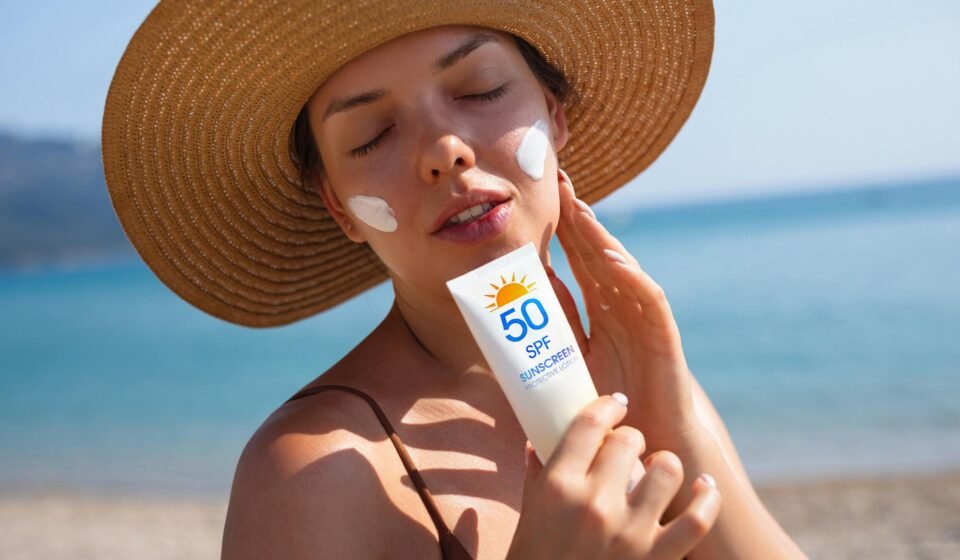

If your skin turns pink after a short time outside, you already know that sunlight can be unforgiving. Fair and pale skin can burn quickly, and repeated exposure can leave behind freckles, uneven pigmentation, fine lines, and other signs of sun damage.
That makes sunscreen an important part of everyday skin care—not just something to pack for a beach vacation.
But standing in front of a shelf full of SPF 30, SPF 50, mineral, chemical, tinted, water-resistant, facial, and body sunscreens can make the choice surprisingly confusing.
So, what should you actually look for?
For most adults, a broad-spectrum sunscreen with SPF 30 or higher is a sensible starting point. If you’re going to spend several hours outside, especially around water or while exercising, SPF 50 or higher and water resistance can be useful.
The formula should also be comfortable enough that you’ll use it generously and reapply it when needed.
Here’s how to find the right option for your skin rather than simply buying the bottle with the biggest SPF number.
Why Fair Skin Needs Extra Sun Protection
Skin color is influenced partly by melanin, the pigment that gives skin its natural color and provides some protection against ultraviolet radiation.
People with lighter skin tones generally have less melanin than people with darker skin. That doesn’t mean darker skin is immune to UV damage, but it can mean that very fair skin becomes visibly damaged by sunlight more quickly.
A typical example is the person who spends an afternoon outdoors and notices redness across the nose, cheeks, shoulders, and upper chest by evening.
That redness is a sign that the skin has received too much UV exposure.
Why Fair Skin Burns More Easily
Sunburn happens when UV radiation damages skin cells. UVB is particularly important in causing the visible redness and burning associated with excessive sun exposure.
Fair or sun-sensitive skin may reach that point faster than skin with greater natural pigmentation.
You may notice:
- Redness after relatively little time outdoors
- Burning or tenderness
- Freckles becoming darker
- Uneven skin pigmentation
- Peeling after a severe sunburn
- Increased sensitivity after repeated exposure
How quickly someone burns isn’t determined by skin color alone. Time of day, geographic location, altitude, season, medication, clothing, shade, and the UV index all influence exposure.
How Melanin Affects Sun Protection
Melanin offers some natural protection, but it isn’t a substitute for sunscreen.
Even people who rarely burn can accumulate UV damage over the years. That’s why daily sun protection is useful across all skin types.
For someone with very fair skin, however, consistent protection can be especially important because sunburn may happen sooner and more visibly.
Fair Skin and Long-Term UV Damage
The effects of sunlight aren’t limited to the occasional painful burn.
UVA rays can contribute to premature skin aging, including wrinkles and age spots, while UVB is the main cause of sunburn. Both forms of UV radiation are linked to skin cancer.
Repeated exposure can contribute to photoaging, hyperpigmentation, fine lines, wrinkles, and cumulative sun damage.
That doesn’t mean sunscreen will stop your skin from aging. It means reducing unnecessary UV exposure is one practical way to protect it.
Quick takeaway: Fair skin doesn’t need a completely different sunscreen category. It needs consistent, adequate broad-spectrum protection that suits the person’s skin and lifestyle.
What SPF Is Best for Fair Skin?
SPF is one of the first things people notice on a sunscreen bottle, but it shouldn’t be the only thing you check.
For everyday use, dermatologists recommend a broad-spectrum SPF 30 or higher. SPF 30 blocks about 97% of UVB radiation when tested and used as directed. Higher SPFs block somewhat more UVB, but none provides complete protection.
For very fair skin, SPF 50 can be a convenient choice when you’re expecting substantial sun exposure.
Is SPF 30 Enough for Fair Skin?
For normal day-to-day exposure, SPF 30 can be a perfectly reasonable choice.
Think about activities such as driving, walking to work, taking the dog outside, shopping, or sitting outdoors for a short period.
The catch is application.
A sunscreen labeled SPF 30 cannot provide its tested protection if you apply only a tiny amount. Under-application is one reason people can still burn despite using sunscreen.
When Does SPF 50 Make More Sense?
SPF 50 is worth considering when you’ll be outdoors for longer.
It makes particular sense for:
- Beach trips
- Hiking
- Outdoor sports
- Gardening
- Boating
- Pool days
- Outdoor work
- Long sightseeing trips
A high SPF does not mean you can stay in direct sunlight all day. Reapplication still matters.
Why Broad-Spectrum Protection Matters
There’s an easy mistake to make when buying sunscreen: looking only at the SPF.
SPF primarily tells you about protection against UVB-related sunburn. Broad-spectrum protection means the product has passed testing for protection across both UVA and UVB ranges.
That’s important because UVA and UVB don’t affect skin in exactly the same way.
UVA: Associated with photoaging and contributes to skin cancer risk.
UVB: The main cause of sunburn and also contributes to skin cancer.
For fair skin, a useful label checklist is therefore:
Broad spectrum + SPF 30 or higher + suitable for your skin + water resistance when needed.
That combination is more meaningful than simply choosing the highest SPF available.
Mineral vs. Chemical Sunscreen for Fair Skin
Walk into any sunscreen aisle and you’ll quickly encounter another choice: mineral or chemical.
Both can be effective. The better option for you often comes down to how your skin behaves and how the sunscreen feels on your face.
How Mineral Sunscreen Works
Mineral sunscreen uses active ingredients such as zinc oxide and titanium dioxide.
These mineral UV filters sit on the skin and interact with incoming UV radiation. They are widely used in products formulated for sensitive skin.
The biggest complaint is cosmetic rather than protective: some mineral formulas leave a visible white cast.
That can be especially noticeable around the eyebrows, hairline, facial hair, and sides of the nose.
How Chemical Sunscreen Works
Chemical sunscreens use organic UV filters that absorb UV radiation.
Different filters can be combined to provide broad-spectrum coverage while producing a thinner, more transparent finish.
For someone who refuses to wear sunscreen because mineral products look chalky, a lightweight chemical or hybrid formula may be the better practical choice.
After all, an excellent sunscreen sitting unopened in your bathroom isn’t protecting your skin.
Which Is Better for Sensitive Fair Skin?
There’s no universal winner.
If your skin is easily irritated, start with a product made for sensitive skin and consider a fragrance-free formula. Mineral sunscreen containing zinc oxide or titanium dioxide may be worth trying if other products sting or irritate your skin.
If a particular sunscreen repeatedly causes burning, itching, or a rash, don’t simply force yourself to keep using it.
Best Sunscreen Ingredients for Fair and Sensitive Skin
You don’t need to memorize an entire ingredient label.
A few ingredients and product characteristics are enough to guide most purchases.
Zinc Oxide
Zinc oxide is a mineral UV filter used in broad-spectrum sunscreen.
It’s a popular choice for people looking for mineral sunscreen and is often found in products marketed toward sensitive skin.
Its main drawback is appearance. Depending on the formulation, zinc oxide can leave a noticeable white film.
Titanium Dioxide
Titanium dioxide is another mineral UV filter.
It’s particularly useful as part of a sunscreen formulation that provides broad-spectrum protection and is commonly found alongside other UV filters.
Like zinc oxide, it can affect how visible the sunscreen looks on the skin.
What Should Sensitive Skin Look For?
If your skin barrier is easily irritated, keep the rest of the formula simple.
Useful labels to look for include:
- Fragrance-free
- Sensitive skin
- Non-comedogenic
- Oil-free, if you have oily skin
- Lightweight
- Gentle
A sunscreen moisturizer can also make mornings easier by combining hydration and sun protection in one product. Just make sure the sunscreen itself provides broad-spectrum SPF 30 or higher.
How to Avoid a White Cast
A sunscreen can protect your skin perfectly well and still be frustrating to wear.
If you can clearly see a pale layer across your face after applying it, you’re less likely to reach for that product every morning.
Why Does Mineral Sunscreen Leave a White Cast?
Zinc oxide and titanium dioxide are mineral particles, and some formulations remain visible after application.
The effect varies considerably from one product to another.
A newer mineral sunscreen may look almost invisible, while another can leave a distinctly chalky finish.
Don’t assume all mineral sunscreens look the same.
Could Tinted Sunscreen Be Better?
Tinted sunscreen is one option for people who dislike the white cast associated with some mineral formulas.
The tint can help the product blend more naturally with your complexion and may also make it more appealing as a makeup-friendly sunscreen.
If hyperpigmentation is one of your concerns, look for tinted products containing iron oxide. These formulas may provide additional protection against visible light, which can worsen dark spots in some people.
Choose the Finish You’ll Actually Wear
There’s nothing wrong with having preferences.
Some people want an invisible sunscreen. Others prefer a dewy finish. Someone with oily skin may want something completely different from someone with dry skin.
Look for terms such as:
- Sheer sunscreen
- Lightweight sunscreen
- Non-greasy sunscreen
- Easy-to-blend sunscreen
- Makeup-friendly sunscreen
- Tinted sunscreen
The important part is that the cosmetic finish doesn’t discourage proper application.
How to Protect Fair Skin Every Day
Buying sunscreen is easy.
Using it properly is where many routines fall apart.
How Much Sunscreen Should You Apply?
For the exposed skin of an average adult’s entire body, the standard recommendation is about 1 ounce, roughly enough to fill a shot glass.
Don’t forget the areas people routinely miss:
- Ears
- Neck
- Hands
- Tops of feet
- Hairline
- Forehead
- Nose
- Lips
For your lips, use a lip balm with SPF 30 or higher.
For the face, use enough product to cover the entire exposed area rather than spreading a very thin film simply to make the bottle last longer.
When Should You Reapply?
If you’re outdoors, reapply sunscreen about every two hours.
You should also reapply after swimming, heavy sweating, or towel drying.
And remember an important distinction:
Water-resistant does not mean waterproof.
In the United States, sunscreen products can be labeled water-resistant for either 40 or 80 minutes under specified testing conditions. The label tells you which applies to that particular product.
Don’t Make Sunscreen Do All the Work
Sunscreen is only one part of good sun protection.
When you’re outside for a long time, combine it with:
- Shade
- Protective clothing
- A wide-brimmed hat
- UV-protective sunglasses
- Planning outdoor activities around lower UV exposure when possible
This becomes particularly useful during vacations or outdoor activities when you’re exposed for several hours.
Check the UV Index
The UV index gives you a better idea of how strong UV radiation is than simply looking at the temperature.
A cool, bright day can still deliver significant UV exposure.
And a cloudy sky isn’t a guarantee of safety. UV radiation can still reach exposed skin when the sky is overcast.
Common Sunscreen Myths About Fair Skin
“I Only Need Sunscreen at the Beach”
Not necessarily.
Driving, walking, sitting outside at lunch, gardening, and other ordinary activities all add to cumulative UV exposure.
You don’t need to live at the beach to experience sun damage.
“Clouds Block the Sun’s Harmful Rays”
Clouds can make a day feel safer than it actually is.
UV radiation can still reach exposed skin when the sky is overcast. That’s one reason daily sun protection remains useful.
“A Base Tan Protects Fair Skin”
A tan isn’t a reliable protective strategy.
UV exposure that produces tanning is itself evidence that the skin has responded to radiation. It shouldn’t replace sunscreen.
“SPF 50 Means I Don’t Have to Reapply”
This is one of the most persistent sunscreen mistakes.
SPF 50 provides more UVB protection than SPF 30 under testing conditions, but it doesn’t stay effective all day without reapplication.
Follow the product’s directions and reapply approximately every two hours when outdoors.
Choosing Sunscreen for Different Fair-Skin Needs
The best formula depends partly on what you’re doing.
For Everyday Facial Use
Look for a broad-spectrum SPF 30 or higher that feels comfortable on your face.
If you wear makeup, a sheer or tinted facial sunscreen may fit more easily into your routine.
If your skin is oily, a lightweight or non-comedogenic formula may be preferable. If it’s dry, consider a moisturizing sunscreen.
For Sensitive Skin
Start with a sunscreen designed for sensitive skin.
Fragrance-free products may be a good place to begin, especially if fragranced skin-care products frequently bother you.
Mineral sunscreen with zinc oxide or titanium dioxide is another option worth considering.
For Swimming and Sweating
This is where a water-resistant sunscreen earns its place.
Choose broad-spectrum SPF 30 or higher and check whether the label specifies 40 or 80 minutes of water resistance. Reapply after swimming, sweating, or towel drying.
For Lips
Your lips are skin too, and they’re easy to overlook.
A lip balm with SPF 30 or higher is a simple addition to an outdoor routine.
For Dark Spots and Uneven Pigmentation
If hyperpigmentation is a concern, consider a tinted broad-spectrum sunscreen.
Products containing iron oxide may provide additional protection against visible light, which can be relevant for people who develop dark spots easily.
Piz Buin vs. Nivea: Which One Is Better?
There’s no honest way to declare one entire brand the winner.
Piz Buin and Nivea both sell multiple sun-care products, and the formulas differ from one product to another. The useful comparison is therefore product against product, not simply brand against brand.
When comparing two bottles, check:
- SPF level
- Broad-spectrum or UVA protection claims
- Water resistance
- Intended use
- Skin sensitivity
- Texture and finish
- Whether you’ll actually apply enough of it
For fair skin, a well-formulated SPF 30 or SPF 50 product that you use consistently is a better choice than a theoretically superior sunscreen that you dislike and rarely apply.
A Simple Sun-Care Routine for Fair Skin
You don’t need ten products.
A practical routine can look like this:
Morning: Apply your normal moisturizer if needed, followed by broad-spectrum sunscreen.
Before going outside: Apply the sunscreen according to its directions before sun exposure.
During outdoor time: Wear sunglasses and protective clothing, seek shade when possible, and keep an eye on the UV index.
Every two hours: Reapply while you’re outdoors.
After swimming or heavy sweating: Reapply according to the sunscreen’s water-resistance directions.
That is far more useful than building an unnecessarily complicated routine.
Final Verdict: Choosing the Best Sun Cream for Fair Skin
The best sun cream for fair skin isn’t necessarily the sunscreen with the highest number on the bottle.
Start with broad-spectrum SPF 30 or higher. If you’re going to spend much of the day outdoors, SPF 50 or higher and water resistance are practical choices.
From there, choose according to your skin.
Sensitive skin may do better with a fragrance-free mineral formula. Oily skin may prefer a lightweight, non-comedogenic sunscreen. Someone concerned about white cast might be happier with a sheer or tinted product.
Then comes the part that matters most: use enough of it, cover exposed areas, and reapply when you’re outside.
Add shade, protective clothing, a hat, and sunglasses when possible.
Fair skin doesn’t need a complicated sun-care strategy. It needs one that you’ll actually follow.
And if you find a sunscreen that protects well, feels good on your skin, and doesn’t make you dread putting it on every morning, you’ve probably found a very good one.
Frequently Asked Questions About Sun Cream for Fair Skin
What Is the Best Sun Cream for Fair Skin?
A broad-spectrum SPF 30 or higher is a strong everyday choice for fair skin.
For longer outdoor exposure, SPF 50 or higher can provide additional UVB protection.
What Is the Best Sunscreen for Very Fair Skin?
Very fair skin benefits from broad-spectrum SPF 30 or higher used consistently and correctly.
For extended outdoor activities, consider SPF 50+, water resistance, shade, and protective clothing.
What SPF Is Best for White People?
There is no SPF prescribed specifically by race, but fair skin can burn more easily.
A broad-spectrum SPF 30 or higher is a sensible baseline for everyday sun protection.
What Sunscreen Makes Your Skin Lighter?
Sunscreen is not designed to bleach or permanently lighten your natural skin color.
It can help prevent UV-induced tanning and pigmentation from becoming darker.
What Is the #1 Best Sunscreen?
There isn’t one sunscreen that works best for every person’s skin, lifestyle, and preferences.
The best practical choice is broad-spectrum SPF 30+ that you apply generously and consistently.
Which Sun Cream Is Better, Piz Buin or Nivea?
Neither brand is automatically better because both offer several different sunscreen formulas.
Compare the specific products for SPF, UVA protection, water resistance, texture, and skin compatibility.
Is SPF 50 Better for Pale Skin?
SPF 50 offers somewhat greater UVB protection than SPF 30 when used as directed.
It can be especially useful during prolonged outdoor exposure, but it still requires reapplication.
Is Mineral or Chemical Sunscreen Better for Fair Skin?
Both mineral and chemical sunscreens can provide effective broad-spectrum protection when properly formulated.
Sensitive skin may prefer mineral filters, while others may prefer the lighter feel of chemical formulas.
How Often Should Fair Skin Reapply Sunscreen?
Reapply approximately every two hours when outdoors to maintain protection.
Reapply sooner after swimming, sweating, or towel drying, following the product’s label.
Does Fair Skin Need Sunscreen Every Day?
Daily sun protection is useful whenever your skin is exposed to daylight and UV radiation.
Use broad-spectrum SPF 30 or higher and add shade, clothing, a hat, and sunglasses when appropriate.
Looking for the best sun cream for fair skin? Learn which SPF to choose, how mineral and chemical sunscreens differ, and how to protect sensitive skin.