
Spark plugs are small but essential components that play a major role in your vehicle’s engine performance. They ignite the air-fuel mixture inside the combustion chamber, allowing the engine to produce power efficiently. Whether you drive a gasoline-powered car, motorcycle, SUV, or light truck, replacing spark plugs at the right time helps maintain fuel efficiency, smooth acceleration, and reliable engine performance.
Why Spark Plugs Matter
Every time you start your vehicle, the spark plugs create an electrical spark that ignites the fuel-air mixture. Over time, heat, carbon deposits, and normal wear reduce their effectiveness. Worn spark plugs can lead to engine misfires, rough idling, poor fuel economy, and difficulty starting the engine.
How Often Should You Change Spark Plugs?
The replacement interval depends on the type of spark plugs installed and your vehicle manufacturer’s recommendations. As a general guideline:
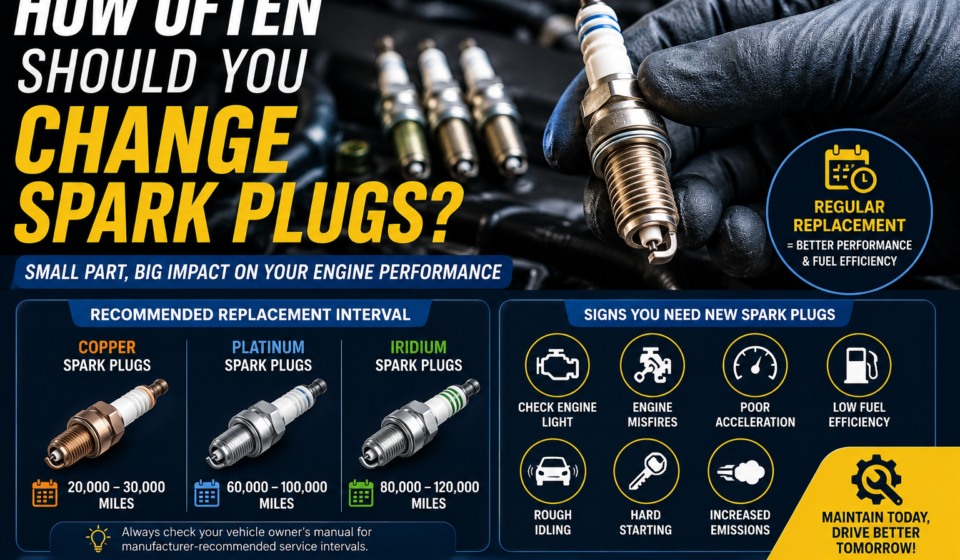
- Copper spark plugs: Every 20,000–30,000 miles (32,000–48,000 km)
- Platinum spark plugs: Every 60,000–100,000 miles (96,000–160,000 km)
- Iridium spark plugs: Every 80,000–120,000 miles (129,000–193,000 km)
Always consult your owner’s manual for the recommended maintenance schedule.
Signs Your Spark Plugs Need Replacement
Watch for these common symptoms:
- Engine misfires
- Rough idle
- Slow acceleration
- Reduced fuel efficiency
- Hard starting
- Check Engine Light
- Increased exhaust emissions
Replacing worn spark plugs promptly can prevent additional engine problems and restore normal performance.
Factors That Affect Spark Plug Life
Several factors influence how long spark plugs last, including:
- Driving habits
- Engine condition
- Fuel quality
- Climate and weather
- Frequent short trips
- Heavy towing or carrying loads
Vehicles driven in harsh conditions may require more frequent inspections.
Benefits of Replacing Spark Plugs
Installing new spark plugs offers several advantages:
- Improved engine performance
- Better fuel economy
- Faster engine starts
- Smoother acceleration
- Reduced emissions
- Lower risk of engine misfires
- Increased overall reliability
Maintenance Tips
To maximize spark plug life:
- Follow your manufacturer’s service schedule.
- Use the recommended spark plug type.
- Inspect ignition coils and spark plug wires during replacement.
- Replace damaged or fouled plugs immediately.
- Avoid delaying routine maintenance.
Frequently Asked Questions
Can spark plugs last over 100,000 miles?
Yes. Many modern iridium spark plugs are designed to last more than 100,000 miles under normal driving conditions.
Can I drive with bad spark plugs?
While the vehicle may continue running, worn spark plugs can reduce performance, waste fuel, and potentially damage other ignition components over time.
Should all spark plugs be replaced together?
Yes. Replacing the complete set helps maintain balanced engine performance.
Conclusion
Spark plugs are a vital part of every gasoline engine. Replacing them at the recommended intervals helps improve performance, fuel efficiency, and engine reliability. Regular inspections and timely maintenance ensure your vehicle continues to run smoothly for years to come. If you’re unsure when your spark plugs were last changed, consult your owner’s manual or have them inspected during your next service appointment.