
AC Compressor Repair
An air conditioner compressor is the heart of any cooling system. Whether you have a residential central air conditioner, a window AC, or a commercial HVAC system, the compressor is responsible for circulating refrigerant between the indoor and outdoor units. When the compressor fails, your air conditioner cannot cool your home effectively.
Understanding the causes of compressor problems, recognizing the warning signs, and knowing when to repair or replace the compressor can save homeowners both time and money. This guide explains everything you need to know about AC compressor repair, maintenance, troubleshooting, costs, and prevention.
What Is an AC Compressor?
The AC compressor is a mechanical device located in the outdoor unit of an air conditioning system. It compresses refrigerant gas, increasing its pressure and temperature before sending it through the condenser coil.
Main Functions
- Compresses refrigerant gas
- Circulates refrigerant throughout the system
- Maintains proper cooling pressure
- Supports efficient heat transfer
- Improves overall cooling performance
Without a functioning compressor, your AC system cannot produce cold air.
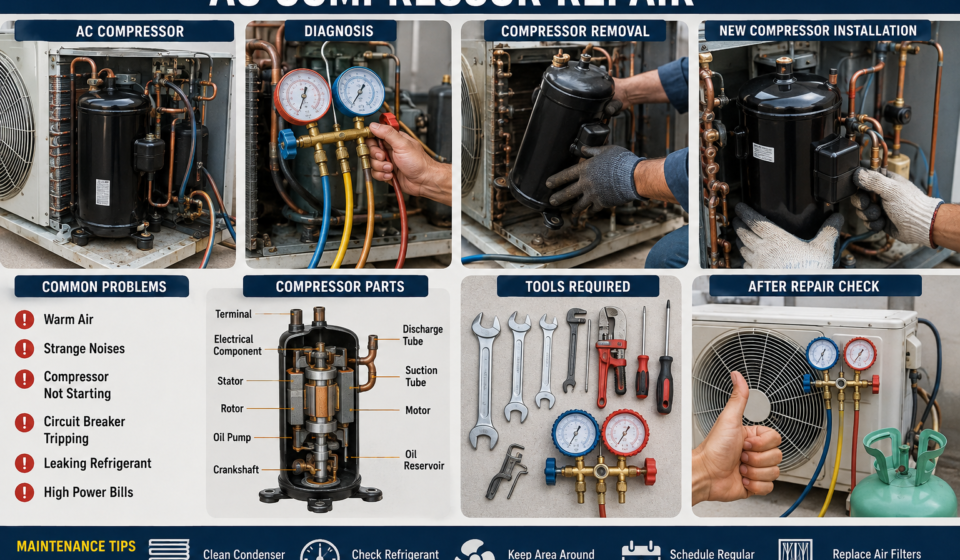
Common Signs of a Bad AC Compressor
Knowing the early warning signs helps prevent complete system failure.
| Symptom | Possible Cause | Recommended Solution |
|---|---|---|
| AC blowing warm air | Compressor not pumping refrigerant | Professional inspection |
| Loud clicking noises | Electrical relay failure | Replace relay or capacitor |
| Humming but not starting | Bad capacitor | Install a new capacitor |
| Circuit breaker trips | Compressor overheating | Diagnose electrical system |
| Outdoor unit won’t start | Failed compressor | Repair or replacement |
| Weak airflow | Low refrigerant or compressor issue | HVAC inspection |
| High electricity bills | Compressor working inefficiently | Full system service |
Common Causes of Compressor Failure
Several issues can damage an AC compressor.
1. Low Refrigerant
Low refrigerant forces the compressor to work harder than normal, eventually causing overheating.
2. Dirty Condenser Coils
Blocked condenser coils trap heat and increase operating pressure.
3. Electrical Problems
Damaged wiring, faulty contactors, or worn capacitors may prevent the compressor from starting.
4. Overheating
Poor airflow and excessive outdoor temperatures can overheat the compressor.
5. Lack of Maintenance
Skipping annual maintenance significantly shortens compressor lifespan.
6. Contaminated Refrigerant
Moisture, dirt, and debris inside refrigerant lines can permanently damage internal compressor components.
How Professionals Diagnose AC Compressor Problems
HVAC technicians typically follow these steps:
- Inspect electrical connections.
- Test the capacitor.
- Measure refrigerant pressure.
- Check compressor resistance.
- Inspect contactor operation.
- Verify thermostat performance.
- Look for refrigerant leaks.
- Test system airflow.
Professional diagnostic equipment ensures accurate repairs and prevents unnecessary part replacements.
AC Compressor Repair Process
A typical repair may include:
| Repair Step | Description |
|---|---|
| Electrical inspection | Checks voltage and wiring |
| Capacitor replacement | Restores compressor startup |
| Contactor replacement | Repairs electrical switching |
| Refrigerant recharge | Restores proper pressure |
| Leak repair | Stops refrigerant loss |
| Coil cleaning | Improves heat transfer |
| Compressor testing | Confirms performance |
| System performance check | Ensures efficient cooling |
Can an AC Compressor Be Repaired?
Yes, but it depends on the issue.
Repair is usually possible when:
- Capacitor has failed
- Contactor is defective
- Wiring is damaged
- Minor electrical components need replacement
- Refrigerant leak is repaired
Replacement is generally recommended when:
- Internal compressor components are damaged
- Motor windings are burned
- Compressor is seized
- Multiple failures have occurred
- Repair costs exceed replacement value
Average AC Compressor Repair Costs
Prices vary by location, unit size, and labor rates.
| Service | Estimated Cost (USD) |
|---|---|
| Diagnostic inspection | $75–$200 |
| Capacitor replacement | $100–$300 |
| Contactor replacement | $150–$350 |
| Refrigerant recharge | $200–$600 |
| Leak repair | $250–$1,000 |
| Compressor replacement | $1,200–$3,000+ |
Costs are approximate and can vary depending on the system and region.
Preventive Maintenance Tips
Regular maintenance can extend compressor life.
When Should You Replace Instead of Repair?
Replacement is often the better choice if:
- The compressor is over 10–15 years old.
- Repairs are frequent and costly.
- The unit uses obsolete refrigerant.
- Energy efficiency has significantly declined.
- Repair costs approach the price of a new system.
A newer, energy-efficient system may reduce long-term operating costs.
Frequently Asked Questions
Can I repair an AC compressor myself?
Basic tasks such as cleaning the outdoor unit or replacing an air filter are suitable for homeowners. Electrical repairs, refrigerant handling, and compressor replacement should be performed by a licensed HVAC technician.
How long does an AC compressor last?
Most compressors last between 10 and 15 years with proper maintenance.
What causes an AC compressor to overheat?
Common causes include dirty condenser coils, low refrigerant, poor airflow, electrical faults, and high outdoor temperatures.
Is replacing a compressor cheaper than buying a new AC?
It depends on the age and condition of the system. If the unit is relatively new, replacing the compressor may be worthwhile. For older systems, replacing the entire air conditioner can provide better efficiency and reliability.
How can I prevent compressor failure?
Annual maintenance, clean filters, proper refrigerant levels, and prompt repairs of minor issues are the best ways to extend compressor life.
Conclusion
The AC compressor is the core component of any air conditioning system, making its health essential for reliable cooling. Recognizing early warning signs such as warm air, unusual noises, or frequent breaker trips can help prevent more extensive damage. Routine maintenance, timely inspections, and professional repairs improve system performance, reduce energy consumption, and extend equipment lifespan. By addressing compressor issues promptly and following a regular maintenance schedule, homeowners can enjoy dependable cooling and avoid unexpected repair expenses.
SEO Meta Title: AC Compressor Repair: Signs, Costs, Troubleshooting & Maintenance Guide
Meta Description: Learn everything about AC compressor repair, including common problems, repair costs, troubleshooting, maintenance tips, and when to repair or replace your air conditioner compressor.